

Industrial flooring selection directly affects production safety, maintenance cost, and service life. In factories, warehouses, food plants, cold storage facilities, and chemical workshops, three systems are commonly used: polyurethane mortar flooring, water-based polyurethane flooring, and polyurea flooring. Each system is based on different chemical mechanisms and is designed for different working conditions. They cannot be treated as interchangeable solutions.
Polyurethane mortar flooring is a rigid, heavy-duty system formed by the reaction of polyurethane resin with mineral fillers such as quartz sand and cement. The result is a dense, thick, and highly durable surface layer. This structure gives it strong resistance to mechanical stress, chemical attack, and thermal shock. It is widely used in environments where forklifts operate continuously, where hot water cleaning is required, or where acidic and alkaline chemicals are present. Typical applications include food processing plants, chemical workshops, cold storage rooms, and heavy industrial production areas. The main limitation is its rigidity. It is not suitable for substrates with active cracking, as it does not provide crack-bridging ability.
Water-based polyurethane flooring is a different system. It uses water as a dispersion medium, and after application, the water evaporates to form a polymer film. This type of flooring is mainly designed for light-duty and indoor environments where environmental requirements are strict. It has very low odor and low volatile organic compound emissions, making it suitable for hospitals, schools, offices, and commercial buildings. However, its mechanical strength is lower compared to other systems. It cannot withstand heavy forklift traffic, strong chemical exposure, or high-temperature cleaning processes. Its durability is limited in industrial conditions, especially where chemical resistance is required.
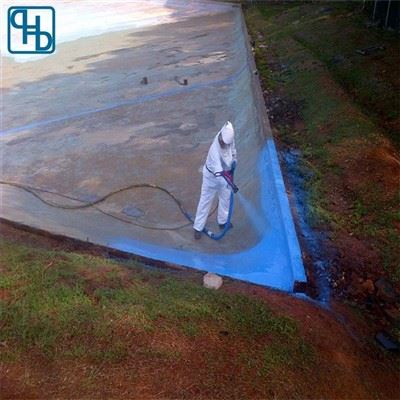
Polyurea flooring is based on a rapid reaction between isocyanates and amine components. It forms an elastomeric coating within seconds or minutes after application. This extremely fast curing speed makes it suitable for projects that require minimal downtime. Polyurea has excellent flexibility and impact resistance, allowing it to bridge cracks and withstand structural movement. It is commonly used in waterproofing systems, storage tanks, sewage treatment facilities, bridge decks, and emergency repair projects. However, it requires specialized high-pressure spray equipment and skilled operators. Surface leveling and finishing quality can be more difficult to control compared to trowel-applied systems.
When selecting a flooring system, the first factor to consider is chemical exposure. If the environment involves strong acids, alkalis, or solvents, polyurethane mortar or polyurea systems are more appropriate. Water-based polyurethane is not suitable for such conditions.
The second factor is mechanical load. Heavy forklift traffic and continuous impact require polyurethane mortar due to its high compressive strength. Light pedestrian traffic or office environments can use water-based systems. The third factor is construction time. If production must resume quickly, polyurea is the fastest option. Polyurethane mortar requires longer curing time but offers more balanced long-term performance.