

Although polyurea has excellent material properties, achieving the expected performance of a polyurea coating system depends heavily on proper application procedures and engineering control. Unlike some conventional coating materials, spray polyurea requires careful consideration of substrate conditions, equipment settings, environmental factors and installation techniques. Even a high-quality polyurea formulation may not perform as expected if the surface preparation or spraying process is not properly controlled.
Before applying spray polyurea, substrate preparation is one of the most important steps. The substrate must be clean, dry and strong enough to provide reliable adhesion. Any contaminants such as oil, dust, grease, rust, loose particles or previous coating residues should be removed before spraying. A poorly prepared surface can significantly reduce bonding strength and may lead to problems such as delamination, blistering, cracking or premature coating failure during service.
Different substrates, including concrete, steel, metal structures and other materials, may require different surface treatment methods. In some applications, the use of a suitable primer may improve adhesion and enhance long-term coating performance. The specific preparation method should be selected according to the substrate type, surface condition and project requirements.
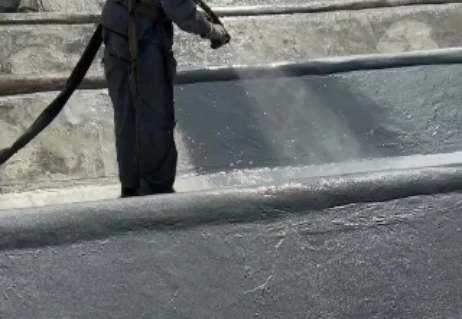
In addition to substrate preparation, equipment and process control play a critical role in spray polyurea application. Polyurea systems require specialized high-pressure spray equipment to ensure accurate mixing and atomization of the two components. Important parameters include the component mixing ratio, spray pressure, material temperature, heating system performance and equipment calibration.
Incorrect equipment settings or unstable operating conditions may affect the chemical reaction between components and result in inconsistent coating properties. Problems such as uneven curing, reduced adhesion, poor mechanical strength or surface defects may occur if the spraying parameters are not properly controlled. Therefore, professional equipment maintenance and experienced operators are essential for achieving stable and reliable coating quality.
Coating thickness control is another important factor that influences polyurea performance. The required thickness depends on the application environment, protection requirements and expected service life. Waterproofing projects, corrosion protection systems and wear-resistant coatings may require different thickness designs according to their specific conditions.
For thicker coating requirements, multiple spraying passes may be necessary. This approach helps control internal stress, improve coating uniformity and reduce the possibility of defects caused by excessive single-layer thickness. Proper thickness measurement and quality inspection during application can help ensure that the final coating meets the project specifications.
Due to the extremely fast curing speed of polyurea, repair and recoating procedures also require special attention. Continuous spraying is generally recommended to achieve a uniform and seamless protective layer. If spraying is interrupted for an extended period, the cured surface may require additional treatment, such as grinding, cleaning or applying a bonding agent, to ensure proper adhesion between coating layers.
Before selecting a spray polyurea system, engineers should carefully evaluate the actual application conditions rather than considering only the general advantages of polyurea. Important factors include the operating environment, required service life, chemical exposure, mechanical loading, substrate condition, installation capability and overall project budget.
For example, a coating system designed for underground waterproofing may require different properties compared with a system used for chemical containment or heavy abrasion protection. Selecting the correct formulation and application method according to the specific requirements is essential for achieving reliable long-term performance.
In conclusion, spray polyurea is a high-performance protective coating technology, but its success depends on both material quality and professional application. Proper surface preparation, accurate equipment control, suitable coating thickness and correct project evaluation are all necessary to maximize the durability and effectiveness of a polyurea coating system.