

5 reasons why you should talk about polyurethane
1. Abrasion Resistance
One of the most common reasons for using polyurethane is the advantage of wear resistance. For decades, polyurethane has excellent wear resistance compared with other elastomers, plastics and metals, so it has been used in highly abrasive environments. The wear resistance of polyurethane components has always been 10 times that of other elastomers.
2. Oil and Chemical Resistance
Depending on your application, polyurethane compounds are available to provide better oil and chemical resistance than other materials.

3. It Fills the Gap Between Rubber and Plastic
Polyurethanes are harder than rubber - which contributes to the outstanding load-bearing abilities - yet they are softer and more pliable than plastics - which accounts for their outstanding impact resistance and all-around toughness.
The hardness of polyurethanes can easily be measured with an inexpensive instrument called a "durometer." However, durometer - urethane hardness - is not a good indicator of performance. It cannot be relied upon as a specification by itself.
4. Extremely Tough Material
Polyurethane is an extremely tough material, exhibiting outstanding cut and tear resistance.
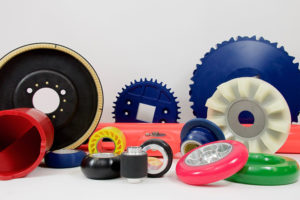
This trait correlates with many useful properties. In many cases, polyurethane elastomers will outlast metal, plastic, and rubber in highly abrasive environments. This characteristic alone has persuaded many OEMs to convert legacy components made from metals, plastics, and rubber into polyurethane to increase the performance of their equipment offering.
5. Polyurethane Resilience
Resilience is defined by Merriam-Webster as: "the ability of something to return to its original shape after it has been pulled, stretched, pressed, bent, etc."
A good way to visualize what's happening when a urethane elastomer is strained is to think about the shock absorber and spring that can be found on an automobile. The spring is used to store energy when it's compressed and then return the energy back to the system. The shock absorber absorbs energy such that the springs don't have the passengers bouncing around uncontrollably as the car travels down the road. The spring and shock absorber work together in what provides the comfortable ride common to today's cars.