

High-performance seals and oil seals: Thanks to its high pressure resistance, high temperature resistance, and excellent media resistance, it is widely used in heavy machinery, hydraulic systems, aerospace, and other fields.
Rollers and wheels: Equipment operating under harsh conditions demands high performance in heat resistance, load capacity, impact resistance, wear resistance, hydrolysis resistance, and dynamic stability. NDIthane elastomer meets these requirements, so it is commonly used for rollers and wheels.
Other fields: Precision equipment, high-speed railways, and automotive components requiring high damping and fatigue resistance; industrial rubber rolls operating at high temperatures or in aggressive chemical environments; and high-performance transmission belts and timing belts, leveraging NDIthane's dimensional stability, non-slip properties, and fatigue resistance.

What is the Disadvantages of NDI Elastomers?
High cost: NDI raw material is relatively expensive, and the synthesis process of NDI elastomers is complex. Its raw material cost is much higher than that of MDI and TDI, which is the most fundamental cost driver. As a result, polyurethane products made from NDI are relatively costly. However, with continuous advances in production technology and gradual industrialization, the cost of NDI is expected to decline over time.
Stringent processing requirements: NDI prepolymers have high reactivity and typically a very short pot life. The mixed material may start to thicken within minutes or even tens of seconds, posing great challenges to casting, degassing, and filling complex molds. Meanwhile, trace moisture in raw materials, fillers, or even ambient air can cause bubbles, defects, and severe performance degradation. All materials must undergo strict dehydration treatment.
Design limitations: NDI elastomers are generally available in high hardness grades (usually above Shore A 90, even Shore D 50–70). There are almost no low-hardness grades (such as Shore A 60–80), which greatly restricts its applications in fields requiring softness and high compression set. Although it has high strength, its high modulus makes it relatively "stiff" and unsuitable for scenarios requiring extremely soft elasticity.
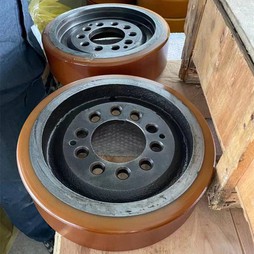
Poor adhesion performance: Due to NDI elastomers' high chemical stability and low surface energy, bonding NDIthane elastomers to metals or other substrates is more difficult than with conventional polyurethane. Highly specialized primers and surface treatment processes are usually required, and the development of bonding processes represents a major challenge.